Dr. Nishchal K. Sharma
Senior Research Fellow, Poultry Nutrition, University of New England
Feed accounts for more than 70% of the cost of broiler production. Yet, despite advances in nutrition and genetics, a substantial proportion of nutrients in modern poultry diets still pass through the bird unused. Research has consistently shown that around 30% of dietary nutrients are excreted, even in well-formulated maize- and wheat-based diets. Around 1/3rd of this lost fraction is fibre, particularly non-starch polysaccharides (NSP) plus lignin, followed by protein and other nutrients. These undigested nutrients reduce feed efficiency, increase litter moisture, compromise shed conditions, and contribute to higher nutrient losses to the environment. This research project funded by BASF SE and managed by Poultry Hub Australia set out to address a simple but critical question: how can we unlock more value from the feed already being fed to broilers and enhance sustainability?
Poultry diets rely heavily on cereal grains and vegetable protein meals such as wheat, maize, and soybean meal. While these ingredients are excellent sources of energy and protein, they also contain complex fibres and phytate that broilers cannot digest on their own. Soluble NSP, particularly arabinoxylans, increases digesta viscosity, slowing digestion and reducing nutrient absorption. Insoluble NSP, on the other hand, physically trap nutrients, preventing digestive enzymes from accessing them. To manage these challenges, enzymes such as phytase and xylanase are already widely used in commercial diets. However, fibre composition varies substantially between ingredients. A single enzyme is often not enough to address the diversity and complexity of NSP found in modern broiler diets, especially when alternative ingredients such as wheat distillers’ dried grains with solubles (wDDGS) are included.
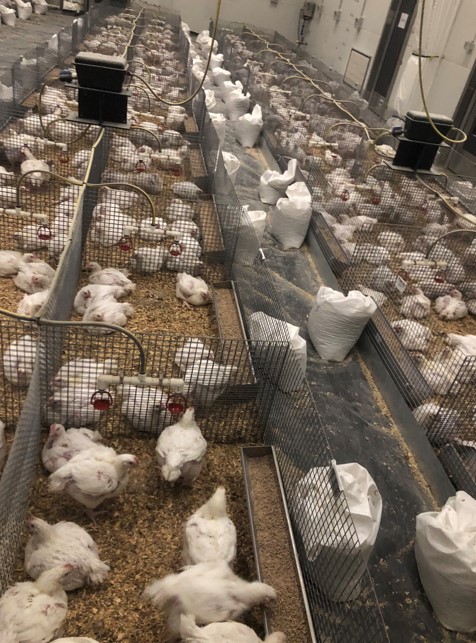
This research program explored how targeted combinations of enzymes and organic acids can improve nutrient utilisation, gut health, and performance across a range of practical diets. Five experiments were conducted which included four in vivo broiler studies and one in vitro digestion study using maize-based, wheat-based, and maize diets containing wDDGS. All diets contained phytase to manage phytate, reflecting commercial practice. Additional feed additives included:
Xylanase and β-glucanase (Natugrain® TS) to target arabinoxylans and β-glucans
β-mannanase (Natupulse® TS) to hydrolyse mannans in soybean meal
Buffered formic acid (Amasil® NA) to support digestion by lowering gut pH
The goal was not just to measure performance, but to understand how these tools work, alone and in combination, under different dietary conditions.
Key Findings: One Size Does Not Fit All
Wheat-based diets: combinations deliver the biggest gains
In wheat-based diets, birds responded strongly to enzyme supplementation. Xylanase reduced digesta viscosity, improved nutrient utilization, energy utilisation and growth performance. β-Mannanase had negligible effect on gut digesta viscosity but enhanced retention of soluble and insoluble NSP and increased fermentation in the hindgut, leading to higher production of short-chain fatty acids, particularly butyric acid, which plays a critical role in gut integrity and health. When xylanase and β-mannanase were used together, their complementary modes of action delivered greater improvements in NSP degradation, growth, energy utilization and gut fermentation (eg. higher butyric acid production) than either enzyme alone. These results highlight that in complex, fibre-rich diets, enzyme combinations are essential.
Maize-based diets: simpler diets need simpler solutions
Maize-based diets contain lower levels of soluble NSP, and birds generally performed well even without additional enzymes. However, targeted supplementation still delivered benefits, especially in younger birds. β-Mannanase improved performance during the starter and grower phases, likely by reducing the antinutritive effects of soybean meal mannans. Xylanase responses were more pronounced later in life, when dietary fibre levels increased. In these simpler diets, single enzymes were often sufficient, provided they were matched to the right production phase.
wDDGS diets: enzymes unlock by-product potential
Including wDDGS increased fibre complexity and created a nutritional challenge, particularly at higher inclusion levels. Birds fed high-wDDGS diets showed poorer growth, higher gut viscosity, and reduced feed efficiency without enzyme support. Xylanase markedly reduced viscosity and improved performance at moderate wDDGS inclusion levels. At higher fibre loads, however, higher enzyme doses and enzyme combinations were required. The best outcomes were achieved when xylanase and β-mannanase were used together, restoring feed conversion ratios to levels comparable with lower-fibre diets. These findings demonstrate that enzymes enable higher inclusion of fibrous by-products, improving diet flexibility while maintaining performance and gut health.
Beyond Digestibility: Feeding the Microbiome
An important and emerging finding from this work was the in situ production of functional oligosaccharides, such as xylo-oligosaccharides (XOS) by xylanase and β-glucanase combination during digestion. These compounds act as prebiotics, selectively stimulating beneficial gut bacteria and increasing short-chain fatty acid production.
Both in vivo and in vitro results showed that strategic enzyme use can convert problematic fibre into substrates that actively support gut health. This shifts enzymes from being purely “digestive aids” to tools that shape the gut ecosystem, improving resilience, nutrient utilisation, and long-term performance.
What This Means for the Poultry Industry
This research reinforces a clear message for producers and nutritionists: enzyme efficacy is highly substrate-dependent. Simple maize-based diets may only require a single, well-chosen enzyme according to the growing phase. Wheat-based and fibre-rich diets demand broader enzyme coverage. Higher fibre inclusion requires higher enzyme doses and complementary enzyme combinations. Precision enzyme selection improves feed efficiency, reduces waste, supports gut health, and enables more sustainable use of alternative ingredients. By turning undigested nutrients into usable energy and beneficial fermentation products, these strategies reduce feed costs, improve profitability, and lower the environmental footprint of poultry production. As the industry continues to evolve, precision nutrition by matching the right enzyme solution to the right diet will be key to producing more chicken meat from fewer resources, supporting both economic and environmental sustainability.