Background Information
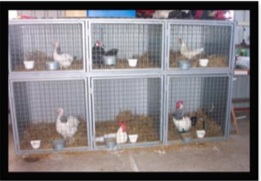
Some chooks at the Tintinara Area School’s project
Background Information
The students at Tintinara Area School in year 6/7 Agriculture prepare and show poultry each year. For this project, students will compile information on the procedures associated with preparing and showing poultry. Students will also identify the benefits of showing poultry.
Materials / Method
See the following details in the handbook on the suggested equipment and procedures for preparing and showing poultry. The 6/7 students will complete a survey on their experience while working with the show poultry.
Results
See the Appendix for a copy of the survey that students completed.
Summary of Survey Responses
| Question | Positive Responses | Negative Responses |
|---|---|---|
| Did you enjoy working with the show poultry? | 20 | 0 |
| What skills did you learn from working with the show poultry? | 20
Holding & Handling of Poultry; Cleaning & Grooming; Feeding & Watering Requirements. |
0 |
| What were the highlights from working with the poultry? | 20
Working with the poultry & winning prizes at the shows. |
0 |
| Is there anything you did not enjoy doing while working with the poultry? | 2 | 18
When poultry left manure on them! Getting wet when washing chooks. |
| Did you have any memorable moments while working with the poultry? | 17
Poultry milestones (ie stood by its self) and winning prizes at the shows. |
3 |
| Is there anything that could be improved or changed to make working the poultry more enjoyable? | 9 | 11
Having more time with the poultry; having more Ag lessons; not having to deal with chooks with attitude! |
| Are there any other benefits that you can think of from working with the poultry? | 10
Experience; enjoyable; learning how to care for poultry & learning to respect poultry. |
10 |
Discussion
As the surveys reflect the year 6/7 students at Tintinara Area School enjoy working with the show poultry. They learn many skills both about working with the poultry and with each other. The benefits range from learning to care about poultry to teamwork whilst working with each other. Whilst some students may recognize some negatives such as cleaning out cages any negative is far outweighed by the positives.
Conclusion
It is clear that it is beneficial for students to work with show poultry.
You May Also Like


The Poultry Hub Australia profoundly acknowledges and respects that its foundations, both people and facilities, are established on land rich in the history and traditions of the world’s oldest living culture. PHA values and respects Indigenous knowledge, understanding its importance in our shared history. We acknowledge the strength, resilience, and contributions of the Aboriginal community, we pay our tributes to the Aboriginal Elders – those who guided us in the past, those who lead us today, and those who will enlighten our paths in the future.