Feed Ingredients
Feed Ingredients
Feed ingredients for poultry diets are selected for the nutrients they can provide, the absence of anti-nutritional or toxic factors, their palatability or effect on voluntary feed intake, and their cost. The key nutrients that need to be supplied by the dietary ingredients are amino acids contained in proteins, vitamins and minerals. All life functions also require energy, obtained from starches, lipids and proteins.
Feed ingredients are broadly classified into cereal grains, protein meals, fats and oils, minerals, feed additives, and miscellaneous raw materials, such as roots and tubers. These will be discussed in separate headings below. More information on measuring the nutrient composition of ingredients and the process of formulating poultry feeds is available in the section on feed formulation.
Cereal grains
The term “cereal gains” here includes cereal grains, cereal by-products and distillers dry grains with solubles (DDGS). Cereal grains are used mainly to satisfy the energy requirement of poultry. The dominant feed grain is corn, although different grains are used in various countries and regions of the world. For instance, in the US, Brazil and most Asian countries corn is by far the most important energy source for all poultry feed, whereas wheat is the predominant supplier of dietary energy for poultry diets in Europe, Canada, Australia, New Zealand and the Russian Federation. Of course, in reality, a feed manufacturer will use any grain in a poultry diet if it is available at a reasonable price. For instance, in some parts of the US and China wheat is often used in place of corn if its price is below that of corn. In Australia, sorghum is a key grain during the summer season instead of wheat, while in the Scandinavian countries barley and rye are used when these grains are at the right price. Although the amounts and types of cereal grains included in poultry diets will depend largely on their current costs relative to their nutritive values, care must be taken to avoid making large changes to the cereal component of diets as sudden changes can cause digestive upsets that may reduce productivity and predispose the birds to disease.
The quality of cereal grains will also depend on seasonal and storage conditions. Poor growing or storage conditions can lead to grains with a lower than expected energy content or contamination with mycotoxins or toxin-producing organisms such as fungi and ergots. Genetic and environmental factors also affect not only the content of nutrients in grains but also the nutritive value, which takes into account the digestibility of nutrients contained in an ingredient in the target animal.
In addition to the cereals themselves, their by-products, such as wheat bran, rice bran and DDGS, are used widely in poultry feed. Cereal by-products are typically high in fibre, or non-starch polysaccharides (NSP), which are poorly utilised in poultry and are low in ME.
Table 1. ME value and key nutrient composition of cereal grains
| Ingredient | Protein (%) |
ME (kcal/kg) |
Calcium (%) |
Available P (%) |
Lysine (%) |
| Wheat | 13.0 | 3153 | 0.05 | 0.20 | 0.5 |
| Corn | 8.5 | 3300 | 0.05 | 0.20 | 0.3 |
| Sorghum | 9.0 | 3263 | 0.02 | 0.15 | 0.3 |
| Barley | 11.5 | 2795 | 0.10 | 0.20 | 0.4 |
| Rye | 12.5 | 2734 | 0.05 | 0.18 | 0.5 |
| Triticale | 15.4 | 3110 | 0.05 | 0.19 | 0.4 |
| Oats | 12.0 | 2756 | 0.10 | 0.20 | 0.4 |
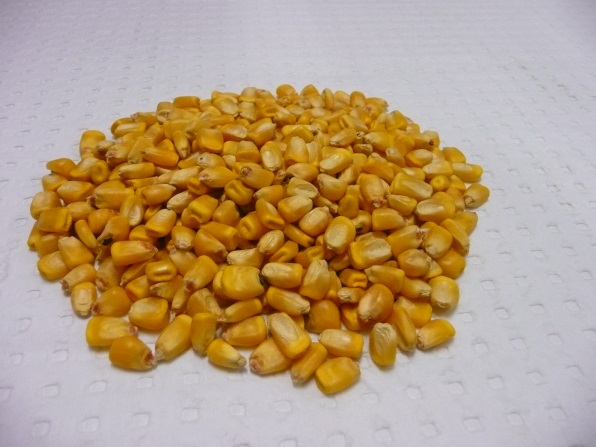
Corn (maize)
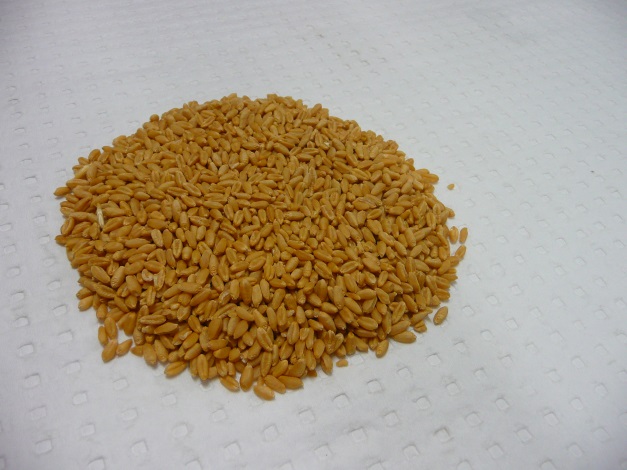
Wheat
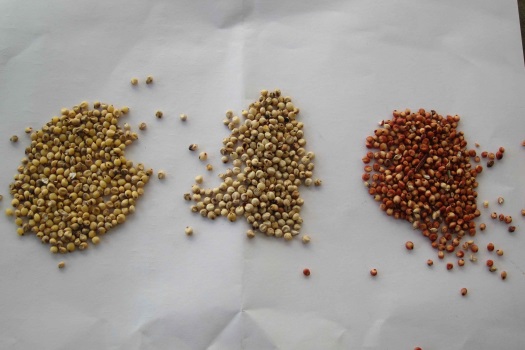
Sorghum
Protein meals
Protein is provided from both vegetable and animal sources, such as oilseed meals, legumes and abattoir and fish processing by-products.
Vegetable Protein Sources
Vegetable protein sources usually come as meal or cake, the by-product of oilseed crops. The main oilseed crops include soybean, rapeseed/canola, sunflower, palm kernel, copra, linseed peanut and sesame seed. After the oil is extracted, the remaining residue is used as feed ingredient. Oilseed meals make up 20-30% of a poultry diet. Inclusion levels do vary among formulations for different species and for the same species in different regions.
The main vegetable protein sources used in Australian poultry diets are soybean and canola. Other sources like cottonseed, sunflower, peas and lupins may be included in poultry feed formulations if these are available at a reasonable price.
Many oilseeds and legumes contain anti-nutritive factors. Some of these anti-nutritive factors can be destroyed by heat and are used in heat-treated meals. New cultivars of some oilseeds and legumes have been developed that are naturally low in anti-nutritive factors (ANF), permitting higher levels of the unprocessed grains to be included in poultry diets without ill-effect. The typical energy values and nutrient composition of vegetable protein sources are shown in Table 2.
Table 2. ME values and Nutrient composition of vegetable protein sources
| Ingredient | Protein (%) |
ME (kcal/kg) | Calcium (%) |
Available P (%) |
Lysine (%) |
Main Anti-nutritional factor |
| Soybean meal | 48.0 | 2557 | 0.20 | 0.37 | 3.2 | Trypsin inhibitor |
| Canola meal | 37.5 | 2000 | 0.66 | 0.47 | 2.2 | Glucosinolates |
| Cottonseed meal | 41.0 | 2350 | 0.15 | 0.48 | 1.7 | Gossypol |
| Sunflower meal | 46.8 | 2205 | 0.30 | 0.50 | 1.6 | High fibre |
| Peas | 23.5 | 2550 | 0.10 | 0.20 | 1.6 | Trypsin inhibitor |
| Lupins | 34.5 | 3000 | 0.20 | 0.20 | 1.7 | Toxic alkaloid |
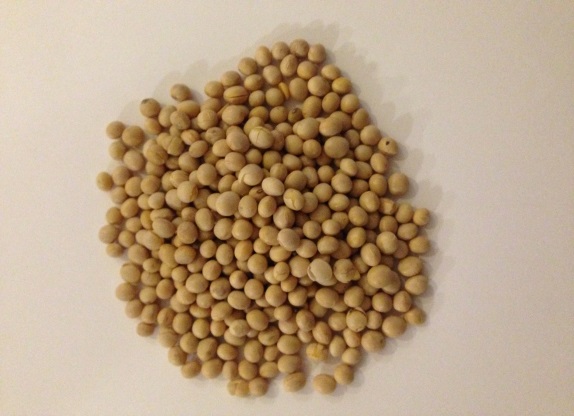
Soybean
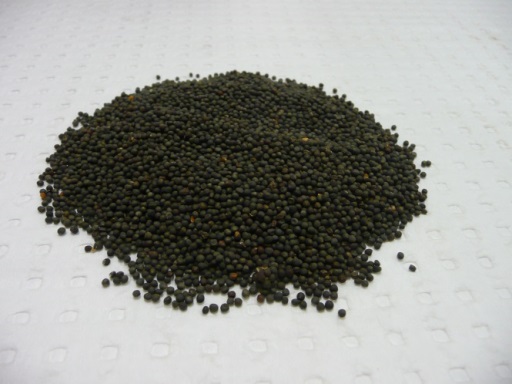
Canola seed
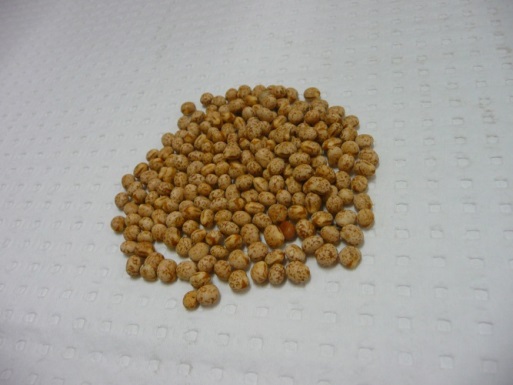
Lupins (lupinus angustifolius)
Animal Protein Sources
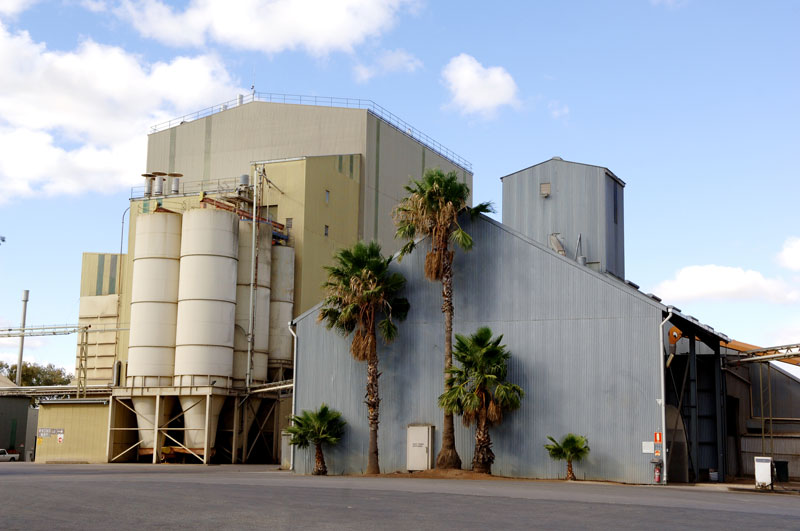
An Australian feedmill
The main animal protein sources used in poultry diets are meat meal, meat and bone meal, fish meal, poultry by-product meal, blood meal and feather meal. Although the production of animal protein for human consumption has been under continual pressure and marred by much controversy, the world-wide and domestic consumption of animal protein continues to grow and much of the future supply of meat protein will come from poultry. With increased animal protein production there will be increased demand for feed and, in particular, a demand for ingredients high in protein and energy.
The animal industry evolved as a means of adding value (i.e. higher nutrient level and availability, flavour, variety, etc.) to ingredients that were of marginal food value for humans. These ingredients include grains that are of poor quality or damaged by harvest or storage conditions; as well as a means of recycling by-products of brewing, vegetable oil, meat, milk and egg production. Approximately 50% of the live market weight of ruminants and 30% of poultry is by-product. These by-products are rendered, ground and available as a feed source.
Animal protein meals are usually defined by inputs. Those specifically used in poultry diets include meat (no bone) or meat and bone meal from ruminants and/or swine; blood meal; poultry by-product meal; feather meal; and fish meal. There are specific limitations now assigned to these products with regards to inputs used and guarantees with respect to minimum nutrient levels. For example, meat and bone meal may be specifically from ruminants and must be free of hair, wool and hide trimmings, except where it is naturally adhering to heads and hoofs. The products are rendered, which is a biosecure process that evaporates water, extracts fat and yields a finished ground product high in protein (which has no resemblance to the raw product) and minerals. The products are marketed with guarantees as to minimum protein, phosphorus and calcium levels.
There are some challenges associated with the use of animal protein sources. First, food safety is the most important concern people have about the recycling of animal protein meals back through animals as feed ingredients. This is based on the links between the prion disease bovine spongiform encephalopathy (BSE – mad cow disease) and a variant Creutzfeldt-Jakob disease in humans. Importantly for poultry production though, researchers have been unable to demonstrate the transfer of prions to poultry (Moore J et.al. (2011) BMC Res Notes. Vol.4, p.501) and no symptoms of disease have been observed in birds up to five years after direct challenges. The proteins (prions) associated with BSE are not destroyed by traditional methods of rendering and are capable of causing disease when BSE contaminated meat and bone meals are injected cerebrally into ruminants.
As a consequence of the public’s concerns about BSE, Australia does not allow the use of ruminant by-products in feed for ruminants; however, ruminant by-products are available for use in poultry feed.
In addition to BSE contamination, there are concerns that animal protein meals are responsible for food borne pathogen contamination, such as Salmonella. Typically these bacteria are destroyed by rendering and possible recontamination is often negated by pelleting of manufactured feeds. In most cases, if poultry acquire Salmonella it is likely to be from an environmental source other than feed. It is possible for animal protein meals to be contaminated with high levels of heavy metals, dioxins and PCBs (pesticides); however, meals are monitored and regulated to minimise this contamination.
Table 3. ME values Nutrient levels in selected animal protein meals
| Nutrient | Meat & Bone | Blood | Feather | Poultry |
| ME (MJ/kg) | 11.2 | 15.2 | 13.7 | 13.1 |
| Protein (%) | 50.4 | 88.9 | 81.0 | 60.0 |
| Fat (%) | 10.0 | 1.0 | 7.0 | 13.0 |
| Calcium (%) | 10.3 | 0.4 | 0.3 | 3.0 |
| Phosphorus (%) | 5.1 | 0.3 | 0.5 | 1.7 |
| Lysine (%) | 2.6 | 7.1 | 2.3 | 3.1 |
| Methionine (%) | 0.7 | 0.6 | 0.6 | 1.0 |
| Cystine (%) | 0.7 | 0.5 | 4.3 | 1.0 |
Source: adapted from Hamilton (2002)
Secondly, with respect to feeding the animal protein meals, the important practical issue is the variability in available nutrients (those that can be absorbed and retained by the bird) and limits to incorporation to maintain a diet balanced for all nutrients, particularly calcium and phosphorus. Table 3 shows the determined averages that are used in determining nutrient levels for meat and bone, blood, feather and poultry meals.
Animal protein meals provide a good source of essential amino acids (e.g. lysine and methionine) and are also good sources of energy and minerals (particularly calcium and available phosphorus). However, there can be significant variation in availability (absorption and retention) of amino acids due to the day to day variation in inputs as well as processing conditions (temperature, moisture, pressure and time). The variation within processing plants can often be greater than the variation between plants. It is important for users to establish strict criteria as to the quality of the product and work with their suppliers to ensure these criteria are met. Quality should include measurements that indicate moisture; nutrient availability (particularly essential amino acids); levels of minerals (for example, calcium can vary from 8–12%; phosphorus from 4–6%); and stability of fat (all meals should be stabilised with an antioxidant).
The most accurate way of measuring the ‘feed value’ of an ingredient is to use an animal assay or bioassay. However, these assays are extremely time consuming and expensive. One of the most promising predictors of nutrient level and availability is near-infrared reflectance spectroscopy. This technology is rapidly being adopted by feed manufacturers and enables rapid screening of incoming products for a wide variety of measurements (moisture, protein, amino acid availability, fat, etc.). In most cases, the samples can be prepared, scanned and results assessed in a few minutes. However, calibrations are still being established for meals and further research is required to classify the cause of variation in feed value.
Animal protein meals have a long history in poultry nutrition. The utilisation of this valuable feed ingredient is important in minimising loss (nutrient and economic value) in the production of safe, high-quality poultry meat, eggs and bioproducts.
Table 4. ME values and nutrient composition of selected animal protein sources
| Ingredient | Protein (%) |
ME (kcal/kg) |
Calcium (%) |
Available P (%) |
Lysine (%) |
| Meat meal | 50.0 | 2500 | 8.00 | 4.00 | 3.6 |
| Fish meal | 60.0 | 2720 | 6.50 | 3.50 | 5.3 |
| Poultry by-product meal | 60.0 | 2950 | 3.50 | 2.10 | 3.4 |
| Blood meal | 80.0 | 2690 | 0.28 | 0.28 | 6.9 |
| Feather meal | 85.0 | 3016 | 0.20 | 0.75 | 1.7 |
Fats and oils
Fats and oils, collectedly termed lipids, are regularly used in poultry feed to satisfy the energy need of the animal as lipids have more than twice the amount of ME compared with carbohydrates or proteins per kg weight. Lipids are also an important carrier for fat-soluble vitamins (A, D, E, and K) as wells for the provision of an essential fatty acid, linoleic acid, in the diet. A variety of fats and oils are used in feed, including lipids of animal origins (usually fats, i.e., tallow, lard, except fish oil) and lipids of vegetable origin (usually oils, i.e., soy oil, canola/rapeseed oil, sunflower oil, linseed oil, palm oil, cottonseed oil).
In practical feed formulation, the level of lipids rarely exceeds 4% in compound feed. However, even a small decrease in digestibility can cost dearly in terms of dietary energy. Like any other nutrient, a varying proportion of lipids are undigested depending on their sources and the species and age of the animal to which they are fed. Some of the data are summarised in Table 5.
It is surprising that nearly a quarter of dietary lipids are lost in the excreta of chickens. The significance of this can be seen from the fact that even with a seemingly small amount of inclusion, say 2.5% added fat in feed, it contributes as much as 7-9% of the dietary energy of a typical poultry diet. Thus, any improvement in digestibility, which may be achieved via the use of appropriate additives, such as enzymes, acidifiers and emulsifiers, will have a significant impact on the energy content of diets.
Table 5. Lipid source and bird age on total tract digestibility of lipids
| Lipid source | Digestibility (%) | Bird age (week) | Digestibility (%) |
| Tallow | 73.6 | 1 | 53.2 |
| Soy oil | 85.0 | 2 | 80.7 |
| Tallow-soy blend | 75.4 | 3 | 85.9 |
| Poultry fat | 82.1 | 5 | 85.7 |
| Palm oil | 77.2 | Average | 76.4 |
Tancharoenrat 2012.
Minerals and vitamins
Minerals are vital for normal growth and development in poultry, such as bone formation and body processes such as enzyme activation. Some minerals such calcium and phosphorus are required in large quantities. For example, laying hens require between 3.5-4% calcium, 0.3-0.4% available phosphorus and 0.2% sodium in their diets for egg production. Other minerals, such as copper, iron, manganese, zinc, selenium, cobalt, iodine and molybdenum, are required in milligram quantities but deficiency of these minerals will lead to serious health problems in mild cases and death in severe cases.
Similarly, vitamins are essential for the body systems of poultry. Both fat soluble (A, D, E, K) and water soluble (biotin, choline, folic acid, niacin, riboflavin, thiamine, pyridoxine, pantothenic acid and B12) are needed in the diet to maintain proper health and wellbeing of poultry.
Some vitamins and minerals are provided by most ingredients but the requirements for vitamins and minerals are generally met through premixes added to the diet. Diets may also contain additives for specific purposes. These are discussed in more detail in the section on feed additives.
You May Also Like


The Poultry Hub Australia profoundly acknowledges and respects that its foundations, both people and facilities, are established on land rich in the history and traditions of the world’s oldest living culture. PHA values and respects Indigenous knowledge, understanding its importance in our shared history. We acknowledge the strength, resilience, and contributions of the Aboriginal community, we pay our tributes to the Aboriginal Elders – those who guided us in the past, those who lead us today, and those who will enlighten our paths in the future.