Duck
Duck
Since domestication some 4000 years ago, ducks have been used for their meat, eggs and feathers. Today, duck products are still very popular and remain in strong demand, particularly in Asia. In Australia, production is rapidly increasing, fuelled by a dramatic increase in the demand for duck meat. Globally, Australia is very young in terms of the history of duck as a commercial enterprise. It is only since the 1970s -80s that the duck industry in Australia has really expanded, with two main companies, Pepe’s Ducks and Luv-a-Duck. These companies have capitalised on improvements in duck growth which has been fuelled by research in Europe and North America and by adapting this to suit Australian conditions.
Pepe’s Ducks Pty Ltd has two different types of Peking ducks; the Grimaud duck (French) and the Cherry Valley duck (English); both world leaders in terms of duck genetics. They have four strategically placed breeder farms and two hatcheries which supply 21 growing farms.
Breeds
The Pekin duck (Anas Domesticus) has a large body, orange feet and beak and creamy white feathers. It was developed as a breed in China during the time of the Mongols. The Pekin duck is the preferred breed for commercial meat production in Australia, primarily due to its rapid growth rates. Overseas, Pekin ducks have achieved weights of up to 3.2 kg by 6 weeks of age, but in Australia, the production figures are much lower and producers generally try to achieve the marketable weight of 2.85 kg in 6 weeks. It is considered to be a multi-purpose breed because it also has a high level of egg production. A further advantage is that this breed does not exhibit broody behaviour, which is apparent in some other breeds.
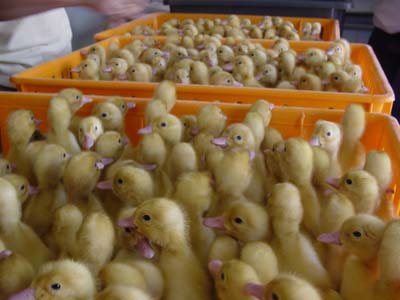
Ducklings
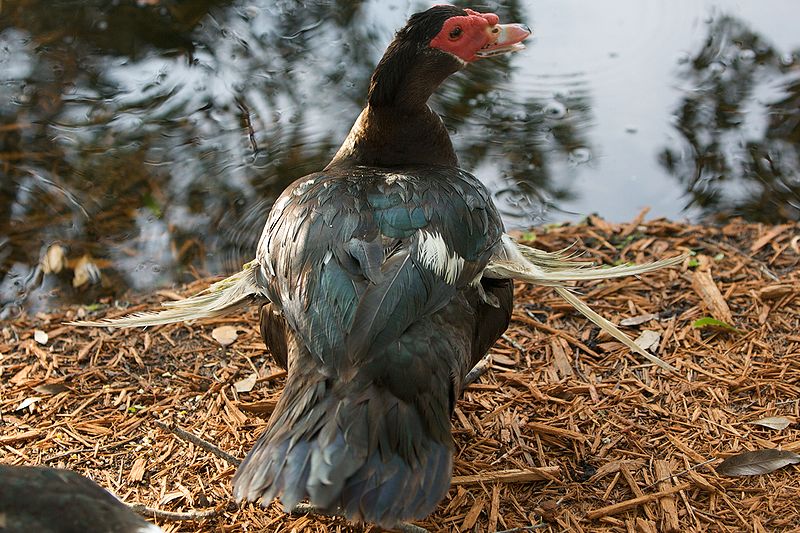
The Muscovy duck (Cairina moschata) originates from South America and is the only domesticated breed not derived from the Mallard. In reality, Muscovies are not true ducks and are actually genetically more similar to geese than ducks. Features that distinguish the Muscovy include its bare face and the red caruncles positioned around the eyes and beak. They prefer to graze, have a slightly curved bill to harvest grass seeds, and egg incubation time is 35 days instead of 28. They do not have curled feathers on the upper tail that characterises drakes after about 4 weeks of age. It was once a popular breed for Australian production, but in many cases, it has been replaced by the faster growing and more easily managed Pekin duck. The early development of the Muscovy is quite slow and it generally takes 10-11 weeks to achieve market weight.
There is a considerable difference between the growth rates of the sexes and males can be up to 45% heavier than females when they reach market weight. The male may weigh over 5 kg at slaughter (84 days) and the female 3 kg (68 days). The difference between male and female growth rates makes single-sex rearing a necessity because the sexes require separate processing. Additionally, the males in mixed-sex pens can have negative effects on female growth rates through competition for food. Other disadvantages of Muscovies include a low rate of egg production and their broodiness at lay. Despite its disadvantages, the breed is still used in production because its meat is leaner than that of other breeds and this provides a considerable marketing advantage in health-conscious societies such as Australia. The Muscovy duck is prized, especially in France, for its lean, red meat similar to beef. Often Muscovies are crossed with other breeds to produce Mule ducks, which have characteristics of both.
Indian Runners (Anas platyrhynchos) are used for their prolific egg producing ability. They are capable of producing 365 eggs in a year. The breed originates from Asia and can be identified by its tall, upright stance.
Khaki Campbells (Anas platyrhynchos) are predominately used for egg production, but are also good meat birds. The most distinguishing feature of this breed is its khaki colouration. The breed was developed in England in the early 19th century by crossing the Indian Runner with the Rouen. Khaki Campbells may produce up to 344 eggs in a year.
Mule (or Mulard) ducks (Anas platyrhynchos x Cairina moschata) are produced from the crossing of Muscovy ducks with common ducks. They are sterile hybrids, bred predominantly for meat and fat liver production. The lean meat typical of Mule ducks is desirable in health conscious societies.
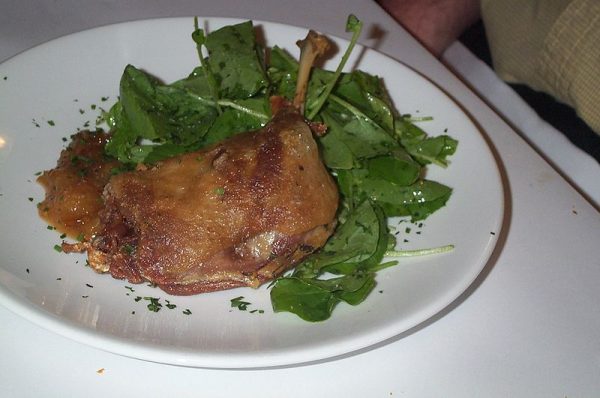
Braised Duck - Photo courtesy of Wikimedia Commons
Cooking
Preferences with regard to the breed of duck and method of preparation vary widely. In Australia and other westernised countries roasted, braised or barbecued duck appears as a popular dish in fine restaurants. Duck meat can be described as dark, tender meat with a mild flavour. The breast muscle is lighter and has a milder flavour than the leg muscles. More recently, duck cuts such as the breast and legs destined for home preparation have become available in supermarkets. The majority of the world’s duck production occurs in Asia, where it plays a more substantial role in the diet, often providing an important source of protein.
Peking Duck
Peking duck is often confused with Pekin duck. Pekin duck is a breed of duck, whereas Peking duck refers to a dish prepared in many Chinese restaurants. To make Peking duck, air is pumped between the skin and the flesh prior to cooking. The duck is then roasted until it is crisp on the outside and succulent on the inside and the skin and meat are served separately. The meat is served with hoisin sauce and rolled with scallions in thin pancakes.
Global duck production
Of the 4.37 million tonnes of duck meat produced in 2013, 83.7 % was produced in Asia. The annual industry growth in Asia has been a commendable 3.5 % and the region is considered the main duck producing region in the world. Mainland China where ducks (Anas platyrynchos) were first domesticated over 4000 years ago, is the key producer. China produces more than 2.9 million tonnes of duck meat per year, representing almost 80% of the regional production and more than 60% of global duck meat production. Although there are numerous breeds, there are mainly three that are found in commercial meat production: the Pekin, Muscovy (Barbary) and the Mule duck (sometimes a cross between the Muscovy and Pekin, although in Taiwan local breeds are also used).
Domestic ducks have had a reputation of being fat and although carcass fat has been reduced considerably through selection, it is still substantially more than in broiler chickens with a poorer feed efficiency of about 2.5: 1 for the Pekin. Ducks are more difficult to process and the carcass is waxed to remove pin feathers; consequently it is labour intensive and the processing plant is less automated than that for broiler chickens. Rapid advances have been made in the breeding of meat ducks, especially white Pekin, through cross breeding. Typically, the final commercial bird is usually made up of four pure strains (two F1 parents) each with special selection objectives such as growth rate, breast meat yield, feed efficiency and number of eggs laid. These programs have led to improvements of 1-2%, annually, within these parameters.
Although duck eggs are not consumed widely outside Asia, in countries such as Vietnam and Indonesia ducks are kept primarily for table eggs. Local breeds of ducks are often herded in flocks of about 100 in the rice fields where they scavenge for their feed and follow the harvest to collect fallen grains and insects, frogs, fish, snakes and other aquatic animals during rice field cultivation and early plant growth. Most Asian countries have their traditional egg-producing breeds, but the Khaki Campbell and the Pekin have become increasingly popular, although the latter is not well adapted to forage in the rice fields.
Duck production in Australia
The Australian duck industry produces over 8 million ducks (18,000 tonnes of duck meat) annually and is worth about $100 million. It is increasing at over 5%/year. Until recently, expansion was driven largely by the growth of the Asian population who have special requirements for duck meat.
The largest, vertically-integrated grower and processor is Luv-a-Duck in Victoria. This family company employs over 160 people and not only grows the ducks (under contract to outside growers) but has its own breeding flocks, egg production, incubation and processing facilities. Although initially focussing on producing whole, mainly frozen ducks (1.7 to 2.5 kg dressed weight), more recently, further processing has become a large part of the business. Smoked duck breast, cooked roast duck legs, roast duck shanks (wings) and a host of ready-to-eat dishes are just a few of their many products, some of which use Chinese recipes. About 30% of production goes to the Asian market. Turnover is around $60 million/year and production is over 100,000 ducks per week and there is a small export market to Asia and the Middle East worth about $2 million.
Pepe’s ducks (Pepe’s Ducks Pty Ltd) are grown on their own farms in New South Wales, and some are processed to meet special requirements. The company, which employs 120 in farming and processing, produces almost 70,000 ducks each week. Of these, about 65% are sold fresh and some for the local Chinese market. Whole ducks are usually processed with head and feet on for the local Asian market which accounts for 80% of production. There is some demand for feet and tongues. The company has expanded into New Zealand and duck products are exported from there.
Both companies have recently imported superior genetic stock from France and the UK to improve duck performance. This is an expensive undertaking as the eggs are incubated and the ducks are raised in government quarantine facilities under strict supervision. There are several smaller duck farmers, especially in Victoria and Western Australia, who process their own birds and market them locally. Currently, there is no large-scale dedicated duck egg producer, although duck eggs, which are larger and contain more fat than hen eggs, are often available particularly in Chinese stores and markets. Processed duck eggs are imported into Australia from countries such as Thailand and Taiwan.
Production
Ducklings are incubated in large-capacity, automated incubators, and hatch at 28 days. They are normally brooded for 10–14 days as opposed to 21 days for chickens. They grow rapidly and the sexes are usually grown together, although there is at least one strain where the sexes are grown separately. Ducks are usually grown in open sided, vermin- and bird-proofed houses with generous floor space and various deep litter cover (straw, rice hull, shavings, saw dust). Ducks drink copious amounts of water when they eat, they excrete watery droppings and often spill water if it is offered in a trough (although nipple drinkers are becoming more common), and as a result, the litter (sawdust, rice hulls, wood shavings) quickly becomes wet. There is therefore a need to regularly add fresh litter and move the drinkers which may be on a wooden slatted base. Coarse wood shavings are not always favoured because they may damage the duck’s fragile web feet. Some production units have mesh wire or slatted floors which allow the excreta and spilled feed to accumulate in pits which is then disposed of in an environmentally-friendly way. Duck manure is often spread on to farming land, especially cropping enterprises. Ducks are grown to about 7 weeks of age and males will average 95 g /day with a feed conversion ratio of under 2.15:1. Breast meat yield is the most important selection trait and this is about 20% of carcass weight. Thigh meat (22% of carcass weight) is also important. However, meat yield (breast and thigh fillets) is considerably less when bones are removed. As mentioned, domestic ducks have a reputation for accumulating body fat and unlike broiler chickens, very little of this is in the fat pad. Selection against fat deposition has reduced carcass fat to about 20% of carcass weight compared to 12-15% in broilers. As a consequence, dressing out is about 65% in ducks, where it is 70-72% in broiler chickens.
Peking roast duck is available in Australia through Pepe’s and this accounts for 55% of Pepe’s production. This has been a traditional dish in China for 800 years and is popular for the crispy skin, which is achieved during processing by pumping air between the skin and the carcass to separate them. Smoked and pressed duck is also found in Asian markets in capital cities and follow traditional Chinese recipes. Pressed duck is steamed, has the bones removed and is then flattened out in a special press and steamed again.
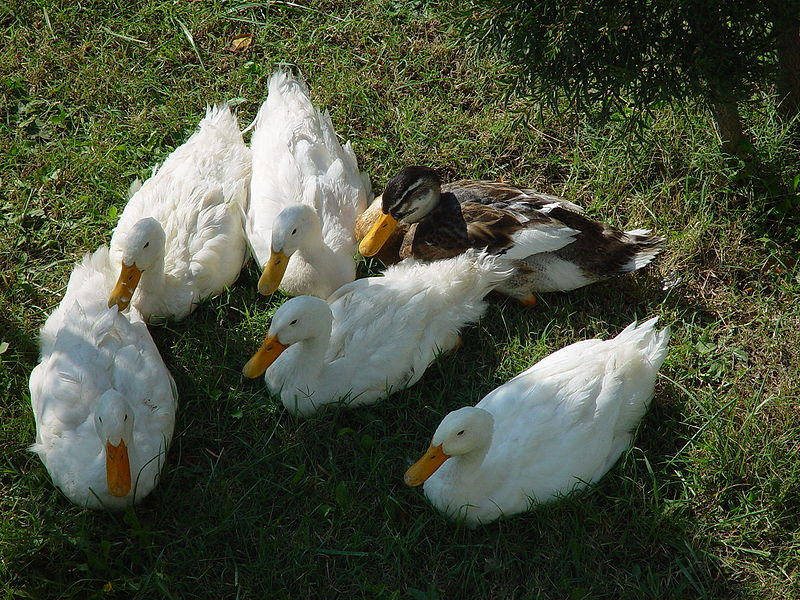
Ducks were first domesticated over 4000 years ago in China - Photo courtesy of Wikimedia Commons
Processing
In Australia, 95% of the meat ducks produced are destined for domestic consumption. The Asian restaurant market for whole birds is the main market, but there is also growing demand from fine restaurants and for specialised cuts in supermarkets. Ducks destined for the whole duck market are grown to a live weight of 2.85kg. Under commercial conditions in Australia, this takes approximately 6 to 7 weeks.
The processing of the duck is similar to that of chicken, except for the waxing of the duck during the removal of fine feathers. After the ducks are processed they are distributed throughout Australia. The biggest challenge within the duck industry is ensuring that all duck farmers and processors, large or small, have functioning biosecurity programmes in place.
Genetic selection and growth
As with the majority of waterfowl species, body weight in ducks is a result of heritability. The selection for greater body weights at market age has been the basis of traditional breeding programs and has resulted in a considerable increase in growth rates. However, the selection for faster growth rates means that birds are slaughtered at an earlier age. The disadvantage associated with slaughtering ducks at an early age is that it reduces the proportion of breast muscle on the carcass, which is the most valuable product from a meat duck. Younger ducks have a lower proportion of carcass breast muscle than older ducks because protein deposition occurs at a late stage in carcass development. Reducing the proportion of breast muscle conflicts significantly with what is demanded by consumers. Consumers desire a small carcass with a high proportion of breast muscle. This represents a dichotomy for the meat duck industry, which seeks to increase output through higher growth rates, but at the same time wishes to produce a product that is consistent with consumer demand.
Predicting the age at which ducks will reach market weight is necessary for maintaining high utilisation rates at the processing plants and satisfying market demand. Numerous factors affect growth and limited available knowledge on duck production in Australia makes predicting growth rates a particularly challenging task. One method of predicting weights at a given point in time is through the use of the Gompertz equation, which has been developed for use in many species of poultry. The coefficients that describe the growth curve differ according to species, strain and sex.
Housing and management
The type of management system depends on a variety of factors such as the availability of funding, labour, technology and also the market for which the ducks are destined. The majority of Asian farms raise ducks on open ponds. These ponds can be constructed without large capital costs and income is often supplemented through the harvesting of aquatic species such as tilapia from the ponds. Furthermore, feed costs are reduced because the ducks’ diet is supplemented with aquatic life in the pond. Another low capital management system used in developing countries is duck herding. Duck herding allows ducks to use their natural foraging skills to acquire food from the environment during the day under the watch of a herdsman. At night they are returned to a shelter where they lay eggs, which are collected the following day. In developed countries, companies can afford sheds in which the environment may be manipulated to suit optimum production. The high degree of control is also necessary to meet the high-quality standards that are expected by consumers. In commercial duck farming, the stocking densities of 5-6 birds/m2 are far lower than that of meat chickens which is 15-20 birds/m2.
Litter management
Duck farming requires a lot more attention to detail than other poultry. The litter conditions are of prime importance, as well as a plentiful supply of water, and appropriate feed. As with all poultry, the greatest importance is the biosecurity of the farm. Biosecurity is the key to our future, and if Australia can prove globally that we have a clean environment safe from exotic poultry diseases it will help assist growth through export. All farms place a strong emphasis on biosecurity.
Reproductive organs and incubation
The copulatory organs of ducks, as with all waterbirds, is significantly more pronounced than in gallinaceous birds. The phallus-like folds of the drake extend out from the cloaca. Despite the anatomical similarity to the mammalian penis, the function of this organ is similar to gallinaceous birds because semen is transported externally via an open groove that spirals down the length of the protruding organ. Pekin duck eggs are incubated for 28 days (35 days for Muscovy ducks). During the first 25 days they are maintained at a temperature of 37.5 degrees Celsius at 86% humidity and turned up to 7 times a day. For the final three days, the temperature is dropped to 36.9 degrees Celsius, the humidity is increased to 94% and the eggs are no longer rotated. Due to artificial selection against broodiness, Pekin ducks will not sit on their eggs, therefore artificial incubation is necessary.
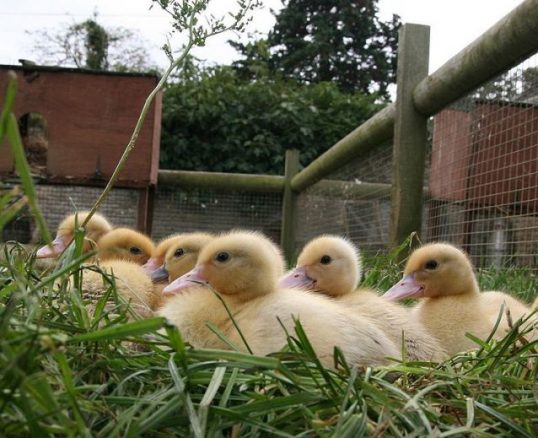
Ducklings in the grass - Photo courtesy of Wikimedia Commons
Duck eggs and hatchlings
Ducks begin laying at approximately 21 weeks of age, which is similar to that of chickens. A typical chicken egg weighs 55 to 65 grams, whereas a Pekin duck is capable of producing an egg that weighs over 90 grams. The egg consists of approximately 50% albumin, 35% yolk and 15% shell. Duck eggs are rich in vitamins and are a particularly good source of vitamins A and D. The only vitamin not present in duck eggs is vitamin C. Duck eggs are also high in cholesterol, containing nearly twice the concentration of chicken eggs. Different nutrient components in the feed may be used to manipulate the nutrient composition of the eggs.
Hatchlings are particularly vulnerable to temperature stress due to their small body size, which means that they are unable to adequately thermoregulate. The absence of a mother duck in commercial rearing necessitates the use of thermal heat lamps. Monitoring the ducklings during the first few days post-hatch is essential. It is possible to determine whether the ducklings are suffering heat stress from their behaviour in the pen, because if the temperature is too hot they will be spread around the outsides of the pen, away from the brooding lamp. Ducklings will also pant and make high pitch chirping noises if they are feeling hot. If the temperature is too cold, they will huddle together in a group under the brooding lamp. Ducklings should be restricted from swimming because the feathering required for them to remain buoyant is incomplete.
Sexing
In the chicken industry, males and females may be separated at an early age through feather sexing, but this technique cannot be applied to ducklings. Therefore, if sexing is required it must be conducted using the vent sexing method. This method requires handlers to visually inspect the internal genitalia of the ducklings to determine whether they are males or females. The method is invasive and the stress associated with this technique often causes increased duckling mortality. At an older age, male ducks may be identified as having a curled tail further and a weak and muffled quack, compared with the loud quack produced from the female. The additional labour required for identifying sexes through this method makes it unviable in commercial situations. Where breeds such as Pekin ducks are used, the small size differentiation between sexes at market weight means that the stressful procedure of sexing may be avoided by raising males and female together in mixed-sex pens.
Handling
In the wild, ducks are waterbirds, and for this reason, their legs and feet have not been developed to bear weight. Picking ducks up by the legs may dislocate joints or break bones, therefore the preferred method for handling ducks is to pick them up by their necks or by placing support on the undercarriage of the duck with ones arm while holding the legs between the fingers.
Example of a duck suffering Angel Wing disease - Photo courtesy of Wikimedia Commons
Disease
Ducks are relatively resistant to disease, but they have been known to carry diseases that are infectious to other types of poultry. For this reason, ducks are usually produced on sites away from other poultry production areas. The main diseases encountered in duck production are non-infectious diseases that are a result of the intensive breeding programs aimed at increasing production. Leg disorders are a common problem for multiple reasons. The breeding of larger birds means that there is more weight being placed on the legs and because ducks are waterbirds their anatomy is more designed for propulsion through water than bearing weight on land. Furthermore, the breeding for earlier muscle development does not coincide with earlier skeletal development and as a result, the legs of young birds are often not developed sufficiently to support their heavy bodies. The cage flooring may also contribute to leg disorders if they are kept on cement or wire mesh. Ideally, clean saw dust should be provided for the flooring. Leg disorders include fractured, broken bones and foot sores.
Ducks are hardy and relatively resistant to most avian diseases, and as a consequence, there is no vaccination program. Outbreaks of diseases such as Salmonella, E.coli and Pasteurella multocidia sometimes occur but these are quickly brought under control. The most serious disease for intensively-reared ducks on multi-age farms is Rimerella (Pasteurella) anatipestifer. Biosecurity is strict and the Industry Biosecurity Manual that has been compiled by the recently-formed Australian Duck Meat Association details measures to minimise the risk of introduction and spread of disease.
Ascites is another disease encountered as a result of intensive breeding for higher growth rates. Ascites occurs because the growth of the heart and lungs are disproportional to the development of the duck and in fast-growing breeds these organs are unable to supply the body’s cells with the high oxygen requirement as a result of accelerated metabolic rates.
Duck nutrition
Ducks require the same nutrients as chickens, but in different ratios. Ducks perform optimally on high energy diets, but unlike chickens they also exhibit adequate growth on low energy diets. The decision of whether to use a high energy or low energy diet depends on the cost and availability of feed ingredients. Protein is required in the diet so it can be broken down into the essential amino acids that are required for muscle and feather production. Generally, ducks will be provided with a starter ration for the first two weeks and then provided with a grower/finisher ration for the remainder of their growth period. The starter ration is usually provided as a crumble and the grower/finisher ration is provided as a pellet.
Nutritional requirements of meat ducks are somewhat different from those of meat chickens. The first two weeks are critical with a generous amino acid allowance (available lysine 1.1%) that declines rapidly thereafter, although energy is held constant at about 12 MJ AME/kg for the grower (2–5 weeks) and finisher (6-7 weeks) diets. Nicotinic acid is higher in diets of meat ducks than of chickens. They are particularly sensitive to an available phosphorous deficiency in the diet. Breeder and egg laying ducks have generous nutrient allowances and energy, protein (19%) and amino acids are higher than for hens. Unlike hens, ducks prefer diets to be pelleted. Feed ingredients for all classes of ducks are similar to those for poultry diets. Although not a serious problem in Australia, ducks are particularly sensitive to feed mycotoxins, especially to aflatoxin.


The Poultry Hub Australia profoundly acknowledges and respects that its foundations, both people and facilities, are established on land rich in the history and traditions of the world’s oldest living culture. PHA values and respects Indigenous knowledge, understanding its importance in our shared history. We acknowledge the strength, resilience, and contributions of the Aboriginal community, we pay our tributes to the Aboriginal Elders – those who guided us in the past, those who lead us today, and those who will enlighten our paths in the future.