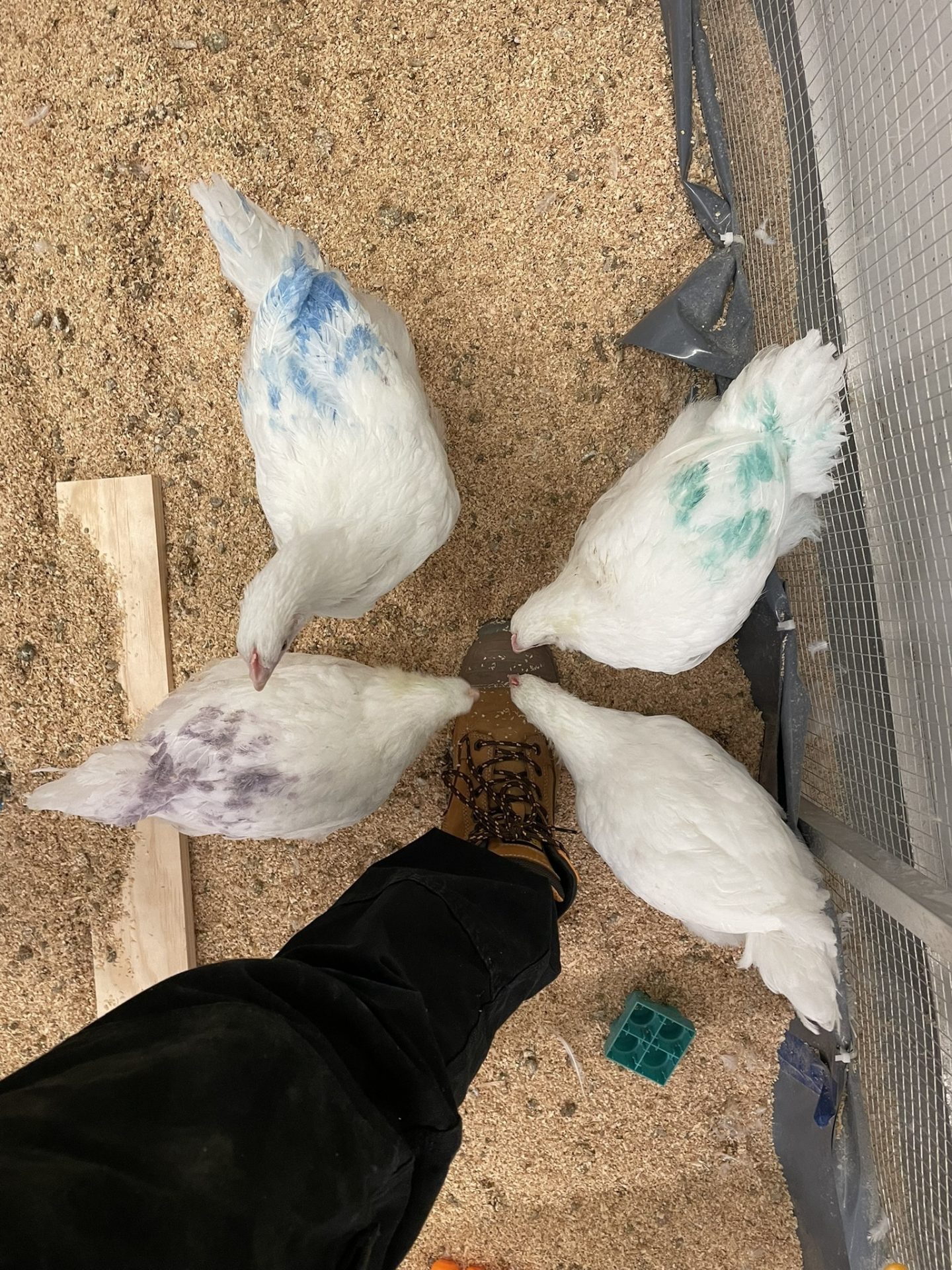
Recent research by Natalie Morgan, Peta Taylor, Bec Forder, David Cadogan, Matt Hilliar, Christine Sydenham and Stuart Wilkinson investigated whether the swelling capacity of dietary fibre could help broiler breeders feel fuller while maintaining the controlled growth required for successful breeding.
Broiler breeders have a strong genetic drive for growth and feed intake. If fed ad libitum, birds can gain excessive body weight, increasing the risk of mortality, lameness, metabolic disease and reproductive problems. Feed restriction is therefore a fundamental part of broiler breeder management, with birds sometimes receiving only 20–30% of the feed they would consume if given unrestricted access. While this supports bodyweight control and reproductive performance, it can also result in hunger, stress and compromised welfare. Balancing breeder performance with satiety and welfare therefore remains an important challenge for the industry.
The research investigated whether the functional properties of dietary fibre could help address hunger associated with feed restriction in broiler breeders. Rather than considering fibre concentration alone, the team examined how different feed ingredients behave physically when exposed to water, including their capacity to swell, hold and bind water. Fibre that absorbs water and increases in volume may increase gut fill, providing a potential mechanism for promoting satiety.
A key output was the development of a database characterising these functional properties across common poultry feed ingredients and fibre-rich ingredients. Considerable variation was identified between ingredients, showing that ingredients with similar nutritional characteristics can behave very differently when exposed to water. This provides an additional way of characterising feed ingredients beyond conventional nutrient and fibre values.
The researchers tested broiler breeder diets with similar nutritional value but different swelling capacities to determine whether this physical characteristic influenced how birds responded to feed restriction. Feeding behaviour and indicators of satiety and welfare were assessed throughout the rearing period.
The project also addressed the challenge of how to assess hunger in broiler breeders. The team evaluated behavioural approaches for assessing feeding motivation and birds’ responses to feed restriction. This work helped identify methods that could be applied in future nutrition and welfare studies to assess whether dietary strategies are effective in promoting satiety.
The findings from this project provide a foundation for considering fibre functionality, rather than fibre concentration alone, in broiler breeder nutrition. Incorporating measures such as swelling and water-holding capacity alongside conventional nutrient values could provide nutritionists with another tool for selecting ingredients and formulating diets. Ultimately, this approach could support the development of feeding strategies that increase gut fill and promote satiety during feed restriction while maintaining appropriate bodyweight control and reproductive performance, helping to address an important welfare challenge in broiler breeder production.
Full report will be released early 2027.