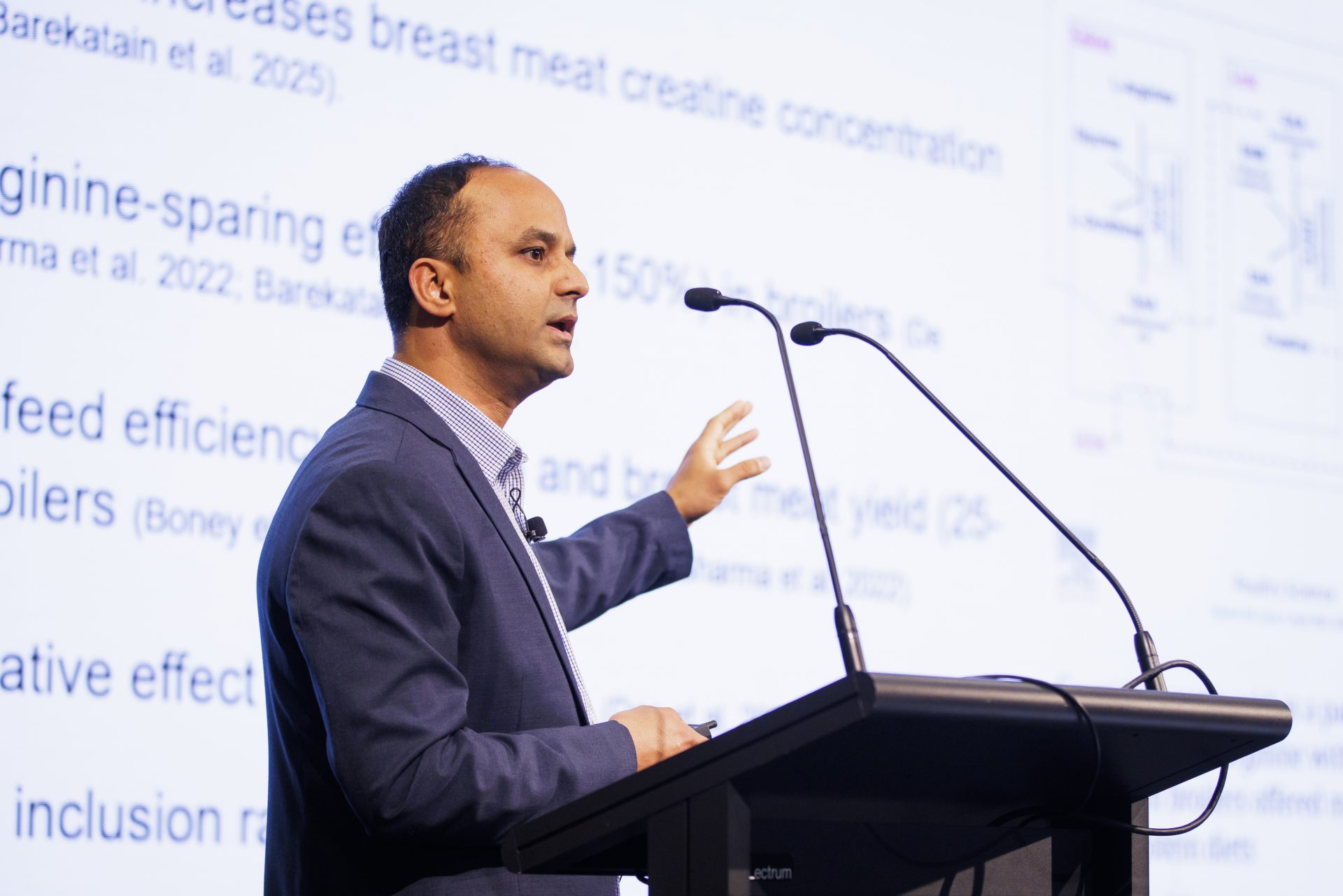
Report prepared by Dr Nishchal Sharma, Senior Research Fellow at the University of New England, who is also pictured above.
The Feedworks Conference 2026, held from 15-17 September at the Novotel Sunshine Coast Resort, brought together more than 250 animal nutrition professionals, industry representatives and scientists to discuss emerging research, technologies and nutritional strategies for improving livestock productivity. The conference featured both ruminant and monogastric sessions, providing an excellent platform for sharing scientific knowledge and strengthening collaboration between researchers and the animal feed industry.
Dr. Nishchal Sharma, Senior Research Fellow at the University of New England, presented recent research investigating how dietary guanidinoacetic acid (GAA; Creamino) can improve energy utilisation, reduce heat production and enhance the net energy (NE) value of broiler diets. He discussed his findings in the context of existing literature, highlighting the potential of dietary GAA to improve heat stress resilience in broilers.
Focus on Net energy
Energy is the most expensive component of poultry diets; therefore, improving the efficiency of dietary energy utilisation is critical for maintaining profitable and sustainable broiler production. Currently, most poultry diets are formulated based on the metabolizable energy (ME) system. Although the ME system accounts for energy losses through excreta, it does not account for energy lost as heat during the digestion, absorption and metabolism of nutrients.
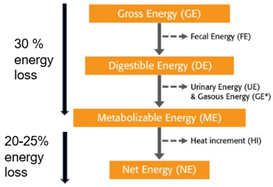
Figure 1: Energy flow diagram
In contrast, the NE system accounts for these additional metabolic energy losses, commonly referred to as the heat increment of feeding. Consequently, NE provides a more biologically meaningful estimate of the energy available for maintenance and productive functions, including muscle growth. Reducing the energy losses from heat could improve feed efficiency and potentially lower the cost of poultry production. Nutritional strategies that reduce heat increment of feed may therefore offer opportunities to support heat-stress resilience in poultry.
GAA: Beyond its arginine-sparing role
GAA is the immediate precursor of creatine, a compound that plays an essential role in cellular energy metabolism. GAA supplementation has traditionally been used in poultry diets because of its arginine-sparing effect. Since arginine is required for endogenous creatine synthesis, supplying GAA can reduce the metabolic demand for arginine, potentially allowing more of this essential amino acid to be utilised for protein synthesis and other physiological functions. Our recent research at UNE suggests that the benefits of GAA extend beyond arginine sparing. By supporting the creatine-phosphocreatine energy system, GAA may improve cellular energy efficiency, reduce reliance on energy-intensive metabolic pathways and decrease the amount of dietary energy dissipated as heat.
UNE research demonstrates improved energy utilisation with GAA
To investigate these effects, our research team led by Dr. Nishchal Sharma and Dr. Shubiao Wu at UNE conducted a controlled broiler experiment using closed-circuit indirect calorimetry chambers to measure whole-body energy metabolism. Ross 308 broilers were fed diets supplemented with four levels of GAA (Creamino): 0, 0.03%, 0.06% or 0.09%. Energy metabolism was measured between 25 and 28 days of age using UNE’s calorimetry facilities. The study evaluated growth performance, AME, NE, heat production, nitrogen utilisation and the partitioning of retained energy between body protein and fat.
The results showed that increasing dietary GAA significantly improved FCR in a linear manner (P = 0.022).
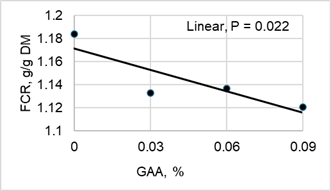
Figure 2: Effect of GAA on feed conversion ratio
Interestingly, GAA supplementation did not significantly influence the AME or AMEn values of the diets. However, dietary NE showed a tendency to increase linearly (P = 0.063), while the efficiency of AMEn utilisation for NE increased significantly (P = 0.017). These findings suggest that the benefits of GAA are not necessarily associated with increasing the amount of AME supplied by the feed, but rather with improving how efficiently that energy is utilised by the bird.
Table 1. GAA and energy utilisation efficiency
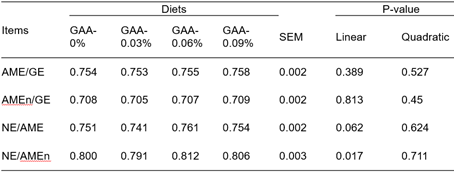
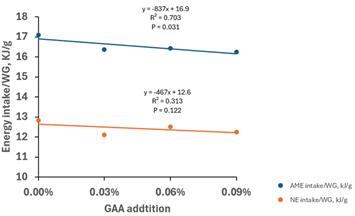
Figure 3: GAA and energy intake/weight gain
This was reflected in energy intake/weight gain where an increase in GAA decreased AME intake/weight gain but did not affect NE intake/weight gain suggesting that birds consume feed to meet the NE requirements. One of the most important findings was a significant linear reduction in heat production (P = 0.015) with increasing GAA supplementation. This reduction in metabolic heat production provides a potential explanation for the improved efficiency of energy utilisation and the tendency towards higher dietary NE.
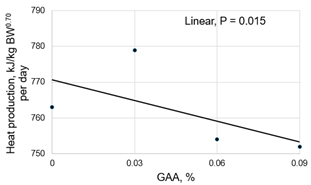
Figure 3: Effect of GAA on heat production by birds
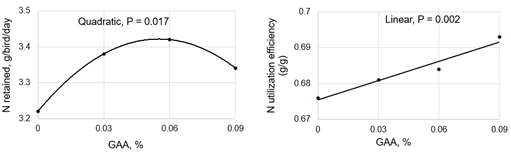
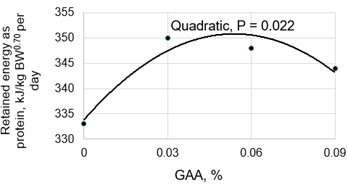
The study also demonstrated improvements in nitrogen utilisation. Nitrogen retention increased quadratically (P = 0.017), while nitrogen utilisation efficiency improved linearly (P = 0.002). Furthermore, energy retained as body protein increased significantly, indicating a favourable shift in nutrient utilisation towards lean tissue deposition rather than fat accumulation.
Collectively, these findings suggest that GAA can improve the efficiency of both energy and nitrogen utilisation, contributing to better growth and feed efficiency. From a commercial perspective, improved energy utilisation also has important implications for feed formulation. While GAA did not increase dietary AME, its ability to reduce heat production and improve the efficiency of AME utilization for NE suggests that its nutritional benefits may not be fully captured by conventional AME-based feed formulation systems.
Acknowledgements: This research was conducted at the University of New England in collaboration with Feedworks and Alzchem Trostberg GmbH, with research funding provided by Alzchem.