Review completed by Dr Dana Campbell- PHA Senior Poultry Scientist
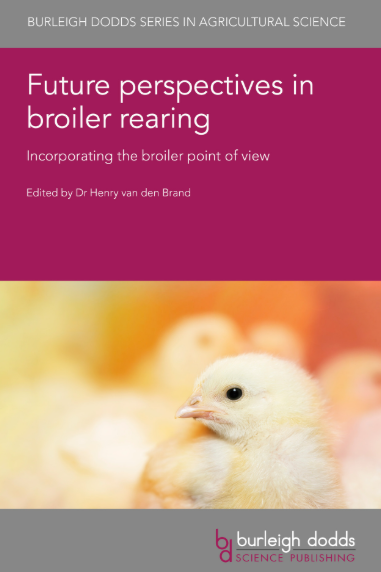
Today’s production of chicken meat is one of the world’s greatest examples of selected efficiency. These birds can go from hatch to slaughter in a matter of weeks, enabling greater access to high quality protein for people worldwide. However, this system can come at a cost to the bird, society, and the environment. This recently published book on ‘Future perspectives in broiler rearing’ edited by Dr Henry van den Brand is a comprehensive volume of work that captures the knowledge of poultry experts from around the world. The text aims to address the numerous challenges in modern broiler production through salient consideration of the bird’s biology and behaviour.
The book is divided into 7 Parts considering the overarching industry, hatching, bird needs, challenges, precision farming, health, and slaughter. The breadth of topics across an impressive 24 chapters facilitates in-depth perspectives on almost every consideration within the industry. For example, we know bird welfare is important to society, but how it is approached can depend on the value that is placed upon the animal, and this can vary across differing ethical views. Environmental management of grower farms, such as litter disposal, has always been important, but will be increasingly so as competition for land and resources is heightened by expanding rural communities. The sustainability of the industry necessitates continual innovation and collaboration between stakeholders from across sectors including those who make policy and farming communities on the ground. Necessary breeding innovation and genetic advancements will continue to deliver on improvements in the grower birds, where the needs of both the farmers and the consumers must be considered. Optimal chicken rearing on grower farms can start with the quality of the chick but henceforth requires a deep understanding of the birds’ behavioural, nutritional, and environmental needs. The complexities of chicken meat farming necessitate adapting to a suite of challenges such as heat stress and antibiotic-free implications. Scientific advancements coupled with new technologies will enable improvements in health monitoring and bird welfare. However, chicken meat production may always be limited in the ability to achieve sustainable circularity given the birds’ high quality feed requirements.
There is much information detailed in this book, making it a key reference source for academics and other industry stakeholders. The breadth and depth of the book across over 800 pages could be an overwhelming coverage to tackle, particularly as the detail highlights the vast complexities of the chicken meat industry and all that must be considered in the strive for optimal meat production. The text of each chapter is detailed, although the broad conclusions within each topic highlight the interdependency of each system component and the knowledge base required to optimise different industry sectors.
By capturing this degree of information within a single book, an extremely comprehensive reference volume is now available to readers along with identifying experts in each area that could further inform on specific challenges. This may enable producers to better tackle these challenges they may be facing using strategies informed by science. The depth of the book highlights the extensive research that goes into bettering chicken meat systems, as well as emphasising the ongoing need for more science for continual industry optimisation under evolving sustainability needs.